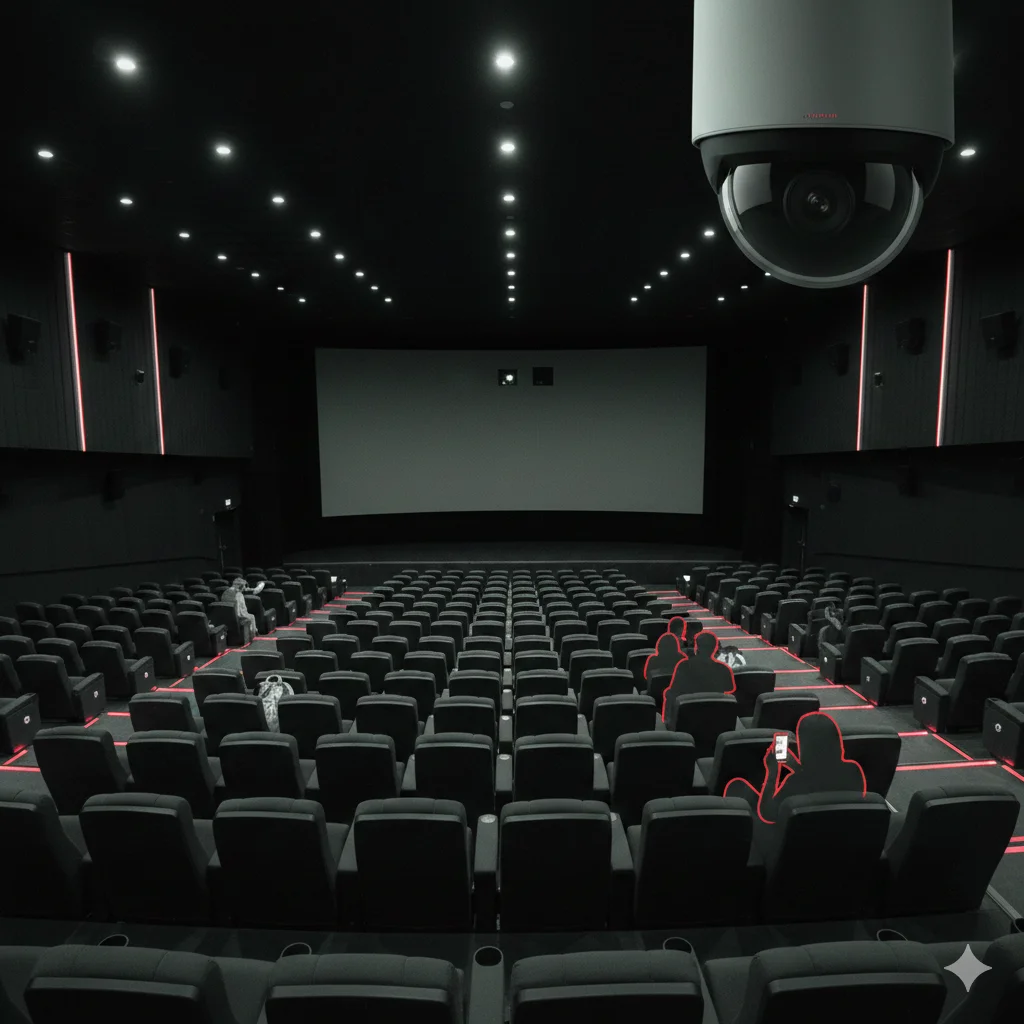
When you walk into a dark cinema to watch the latest blockbuster, you probably aren’t thinking about security. You are likely thinking about the popcorn, the sound, and the big screen. However, a question that often comes up for many people is: do movie theaters have cameras? It is a fair question to ask because movie theaters are dark, private-feeling places where people want to feel comfortable. The short answer is yes, they do. Modern cinemas use various types of technology to keep an eye on things. In this article, we will look at why they are there, where they are hidden, and how they work without ruining your movie experience.
Reasons Why Do Movie Theaters Have Cameras
The main reason why do movie theaters have cameras is for the safety of the people inside. A movie theater is a place where hundreds of strangers sit together in the dark. Because of this, the management needs to make sure that everyone stays safe. If someone feels sick, if a fight starts, or if there is an emergency like a fire, the staff needs to know immediately. Having a set of eyes in the room helps them react quickly.
Another reason why do movie theaters have cameras is to protect the property itself. Theaters spend a lot of money on high-end seats, screens, and sound systems. Unfortunately, sometimes people try to break things or spray paint on the walls. Surveillance helps discourage this kind of behavior. If someone does damage the theater, the recorded footage can be used to find the person responsible and hold them accountable.
Lastly, these systems help with general business operations. Management uses them to see how long the lines are at the snack bar or if the ticket booths are too crowded. By watching the flow of people, they can decide to open more registers or send more staff to help out. It is a way to make sure the business runs smoothly every day.
Where Exactly Do Movie Theaters Have Cameras Located?
If you look around a theater, you might see some cameras easily, while others are harder to spot. So, where do movie theaters have cameras specifically? The most obvious places are the lobby and the entrance. These areas have high foot traffic and involve money changing hands. Cameras here are meant to watch the cash registers and the front doors.
As you move deeper into the building, you will find them in the hallways. These cameras make sure people are going into the right movie and not “theater hopping.” This is when someone pays for one movie but sneaks into three or four others throughout the day. By monitoring the halls, the staff can stop people from doing this.
The most debated location is inside the auditorium itself. Many people ask, do movie theaters have cameras inside the actual room where the movie plays? The answer is almost always yes. They are usually placed high up on the walls, often in the back corners or right above the screen. These cameras have a wide view of every seat in the house. They are not there to watch you eat your snacks, but to keep an eye on the whole crowd at once.
Camera Placement in Movie Theaters: Common Locations Explained
In most movie theaters, cameras are strategically placed to ensure safety and security.
Common locations include the entrance and exit areas. These spots allow staff to monitor who’s coming in and out of the theater. They help deter theft or other unruly behavior.
You’ll also find cameras in ticketing areas. Here, they provide an added layer of protection for both employees and patrons during transactions.
Another frequent placement is within hallways leading to screening rooms. This helps maintain a secure environment as guests move from one area to another.
Some theaters might have cameras positioned inside auditoriums, though these are typically aimed at general seating areas rather than focusing on individuals directly. The goal is clear—ensuring everyone can enjoy their film without worry while keeping a watchful eye on potential issues that may arise.
What to Do If You Notice a Camera in a Movie Theater
Spotting a camera in a movie theater can be surprising. If you notice one, take a moment to assess the situation.
First, consider its placement. Is it clearly meant for security purposes? Often, cameras are positioned near entrances or exits. This is standard practice in public spaces aimed at ensuring safety.
If you’re concerned about privacy, don’t hesitate to approach an employee. They can provide clarification on the camera’s purpose and reassure you about your rights as a patron.
Documenting your findings might also help if you feel uncomfortable. Take note of where the camera is located and any other relevant details.
You could even share your thoughts with fellow moviegoers; sometimes discussing these topics helps ease concerns. Engaging with others can foster awareness around privacy issues without creating unnecessary alarm.
Is It Legal for Movie Theaters to Use Security Cameras?
Movie theaters often use security cameras for various reasons, including safety and loss prevention. But is this practice legal? Yes, it is generally permissible under most state and federal laws.
The key lies in the expectation of privacy. Public areas, like movie theater lobbies and hallways, are fair game for surveillance. However, places where individuals have a reasonable expectation of privacy—like restrooms or changing rooms—are off-limits.
Cinemas usually post signs notifying patrons that they are being recorded. This transparency helps inform guests about their surroundings and any potential monitoring.
It’s essential to remember that while these cameras serve many functions—from deterring theft to enhancing overall safety—they must be used responsibly and ethically by management. The balance between security needs and personal privacy remains an ongoing conversation in public spaces such as theaters.
How Do Movie Theaters Have Cameras That See In The Dark?
One of the biggest mysteries for moviegoers is how these cameras can even see anything. Since the lights are turned off for the movie, a normal camera wouldn’t be able to show much. So, how do movie theaters have cameras that work in total darkness? They use something called infrared technology.
Infrared light is a type of light that humans cannot see, but digital sensors can. The cameras have small bulbs on them that spray the room with this invisible light. To your eyes, the room looks pitch black. But to the security guard looking at a monitor, the room looks like it is lit up in black and white. This allows the theater to monitor the seating area without using bright lights that would ruin the movie for the audience.
These cameras are often very high quality. They can zoom in to see small details if they need to. However, in most cases, they are just used to get a general view of the room. The technology has become much cheaper and better over the years, so even small, local theaters often have these night-vision systems installed now.
Do Movie Theaters Have Cameras To Stop People From Filming?
One of the most important jobs for security is protecting the movie itself. Movie piracy is a big problem where people bring camcorders or phones into the theater to record the film and put it on the internet. This is a major reason why do movie theaters have cameras inside the screening rooms.
The film industry is very strict about this. Sometimes, movie studios even send their own security people to check theaters during big premieres. These people often use night-vision goggles to look for the glowing screens of cameras or phones. The built-in security cameras also help with this. If the software detects a steady light source that looks like a camera lens, it can alert the manager.
In some very high-tech theaters, they use special sensors that can detect the specific type of glass used in camera lenses. While this is not common in every theater, it shows how far they will go to protect their movies. So, if you ever wondered why do movie theaters have cameras pointed at the audience instead of the screen, it is because they are looking for pirates.
Privacy Concerns And Do Movie Theaters Have Cameras Everywhere?
It is natural to feel a little bit weird about being watched while you are trying to relax. You might wonder if your privacy is being taken away. When it comes to the question of do movie theaters have cameras in private places, the answer is no. There are very strict laws about where cameras can be placed.
You will never find cameras inside the restrooms or changing rooms. That would be illegal and a huge violation of privacy. Theaters are considered “public spaces,” which means that when you are in the lobby or the seating area, the law allows the business to record you for security. However, they are not allowed to record you in places where you have a “reasonable expectation of privacy,” like a bathroom stall.
Most theaters also don’t record audio. In many places, recording what people are saying is a much bigger legal issue than just recording video. Because of this, most theater systems are “silent.” They see what you are doing, but they aren’t listening to your private conversations with your friends or family.
The Role Of Staff And Do Movie Theaters Have Cameras For Employees?
Cameras aren’t just for the customers. A big part of why do movie theaters have cameras is to watch the employees. This isn’t because the owners don’t trust their workers, but because it helps with training and safety. For example, if a worker accidentally trips and falls behind the snack bar, the camera footage can show what happened so the theater can prevent it from happening again.
It also helps prevent “internal theft.” With so much popcorn, soda, and candy being sold, it can be easy for things to go missing. Having cameras near the food storage and the registers keeps everyone honest. It also protects the employees. If a customer gets angry and starts shouting at a worker, the camera provides a record of what really happened. This can save an employee from getting in trouble for something that wasn’t their fault.
Frequently Asked Questions
Can the person watching the camera see me clearly? Yes, they can. Most modern systems use high-definition video. With infrared technology, they can see your face and what you are doing even if the movie is very dark. However, they usually don’t sit and stare at one person unless there is a reason to do so.
Do movie theaters have cameras that record all the time? Yes, most systems record 24 hours a day. They usually keep the footage on a hard drive for a few weeks. If nothing happens during that time, the system simply records over the old footage to save space.
Are there cameras in the very back row of the theater? Yes. In fact, the back row is often one of the most monitored areas because people think they can hide there. The cameras are usually positioned to see the entire room, including the very last row.
Why do movie theaters have cameras if there is a security guard? Security guards cannot be everywhere at once. A theater might have 15 different screens playing movies at the same time. The cameras act as extra eyes that allow one or two security people to watch everything from a single room.
Can I ask to see the camera footage? Usually, no. Theater footage is private property. Unless there is a police investigation or a legal reason, a theater will not show the footage to a regular customer. If you had something stolen, you should call the police, and they will ask the theater for the video.
Do movie theaters have cameras in the projection room? Yes. The projection room contains very expensive equipment. Theaters want to make sure that only authorized people are touching the projectors and the computer systems that run the movies.
Conclusion
In the end, the fact that do movie theaters have cameras is something that should make you feel safer rather than worried. These systems are designed to stop crime, prevent illegal filming, and help out in case of an emergency. They use clever technology to see in the dark without bothering you, and they follow strict rules to make sure your most private moments stay private.
The next time you are enjoying a film, you can know that there is a quiet system in place making sure everything goes as planned. It is just one of the many ways that modern theaters work to give you the best possible experience.